Why We Told SmarterSelect to Stop Spending on Google Ads
By Kevin Veitia
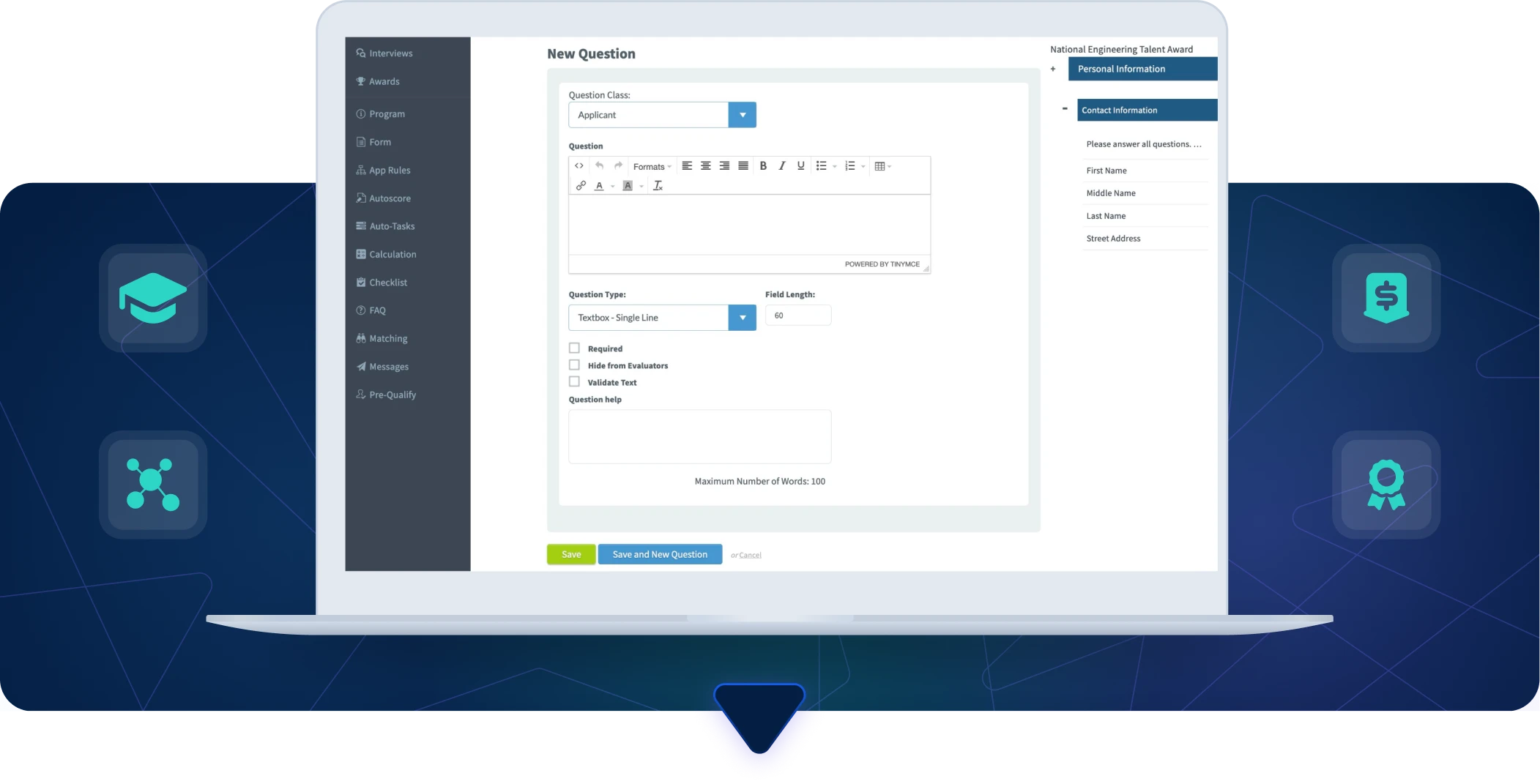
- Client
- SmarterSelect, scholarship and grant management software
- Ideal customer
- Higher-education institutions and US fraternities
- Channels
- Google Ads, Meta Ads
- Timeframe
- September 2024 to September 2025
- Engagement
- Through a partner agency at first, then directly
The challenge
SmarterSelect makes software for running scholarship and grant programs. We took over its Google Ads in September 2024, first through a partner agency and later directly. The account we inherited was set up to maximize impression share. That wins visibility. It doesn't win customers.
The targeting defined the audience broadly as "nonprofits". The conversion tracking counted actions, like submitting a pricing form, that didn't signal real intent to buy. And nobody was judging channels by the only number that matters in B2B: closed deals.
What we did
Rebuilt the account around demos
We switched bidding from impression share to Maximize Conversions on demo requests and stopped counting the pricing form as a conversion. Branded keywords went to exact match only. Existing customers and the 18 to 24 age group were excluded, and competitor ad groups that were serving people from unrelated industries got paused.
One lesson from setup: Google asks for a target cost per acquisition, and most people treat it as a forecast. It isn't. It's a ceiling Google uses to prioritize, and we set it that way.
Narrowed the customer profile
"Nonprofits" is not a customer profile. The data showed SmarterSelect's real buyers were higher-education institutions and US fraternities, so targeting and messaging followed them.
Measured in the CRM, not the ad platform
Ad platforms grade their own homework. We judged every channel by contacts and closed deals in HubSpot, the numbers that actually pay the bills.
What the data said
After six months, paid search had produced 42 contacts and 7 deals: a 16% contact-to-deal rate. Organic search converted at 20%. Direct traffic converted at 34%. In the last 60 days, paid search had produced just four contacts. SmarterSelect was getting six to ten demos a week overall. Ads were producing about two a month, mostly from people already searching for SmarterSelect by name.
We'd already tried competitor angles and feature-based angles. There just wasn't enough search volume around SmarterSelect's features for paid search to find buyers that organic search wasn't already catching.
Our rule: paid search only earns its place when it converts on searches you can't rank for organically. If all it does is catch people already typing your name, you're renting your own traffic. So we recommended stopping Google Ads.
We know how that sounds from someone paid to run ads. But a consultant who keeps a channel alive because it pays their invoice isn't a consultant. They're a tax.
Where the budget went instead
Meta had produced 36 contacts in the same window: decent volume, questionable quality. And only one approach, lead-magnet campaigns, had been tried. Before writing it off, it deserved a real test. The best model for this account was retargeting site traffic, especially pricing-page visitors, because SmarterSelect's customer lists, about 100 to 126 people, were far too small for Meta to match reliably.
The other test was sponsored placements with industry associations SmarterSelect's buyers already read, like NSPA. When your buyers are a niche, it's often cheaper to go where they already gather than to hunt for them in an auction.
What you can take from this
- Measure channels in your CRM, not in the ad platform.
- Paid search must beat organic on something. If it only catches branded searches, you're renting your own traffic.
- Google's target CPA is a ceiling, not a forecast.
- Small B2B lists don't match well on Meta. Retarget site visitors instead.
- Sometimes the best recommendation is to spend less.
Want a second set of eyes on your account? Book a free 30-minute consultation and we'll walk through what's working, what isn't, and where the next win is. Curious what it costs first? Our pricing is public.
Book a Free Consultation